
Argentina on the Road to a “Small Victorious War”

For a long time, Argentina was seen as one of the countries with the greatest prospects in the world. It was not regarded simply as a “developing” country, but as a young, dynamic nation with enormous potential.
Thousands of European immigrants arrived on its shores, especially from Germany, Italy and Spain. In Argentina, they found an opportunity to work, prosper and build a new life. Through effort, knowledge and a strong work ethic, those men and women contributed to the country’s growth.
In the fertile Argentine pampas, advanced agricultural techniques for the time were applied, allowing for large grain harvests and the development of first-rate livestock farming. Argentina thus consolidated itself as a generous land, capable of feeding the world and becoming a source of national pride.

It is true that Argentine development had a very marked profile: the countryside grew with extraordinary strength, while industry advanced more slowly. Unlike in other countries, much of the land was in the hands of large rural landowners, who concentrated a significant share of the wealth generated by agricultural production.
Even so, the Argentine countryside was, for decades, an immense source of national prosperity. The quality of its land, the work ethic of its people and the strength of its production allowed Argentina to occupy a prominent place in world trade.
The problem was that this wealth was not always transformed into a solid industrial base. Much of the profit was channelled into consumption and the lifestyle of the elites, rather than being invested massively in factories, infrastructure and new productive technologies.
That is why, when the Great Depression arrived, the country felt the blow deeply. The fall in international trade directly affected an economy heavily dependent on agricultural exports. Unemployment, poverty and social uncertainty opened the way to a profound political crisis, which ultimately favoured the rise of military governments promising to restore order and stabilise the Nation.
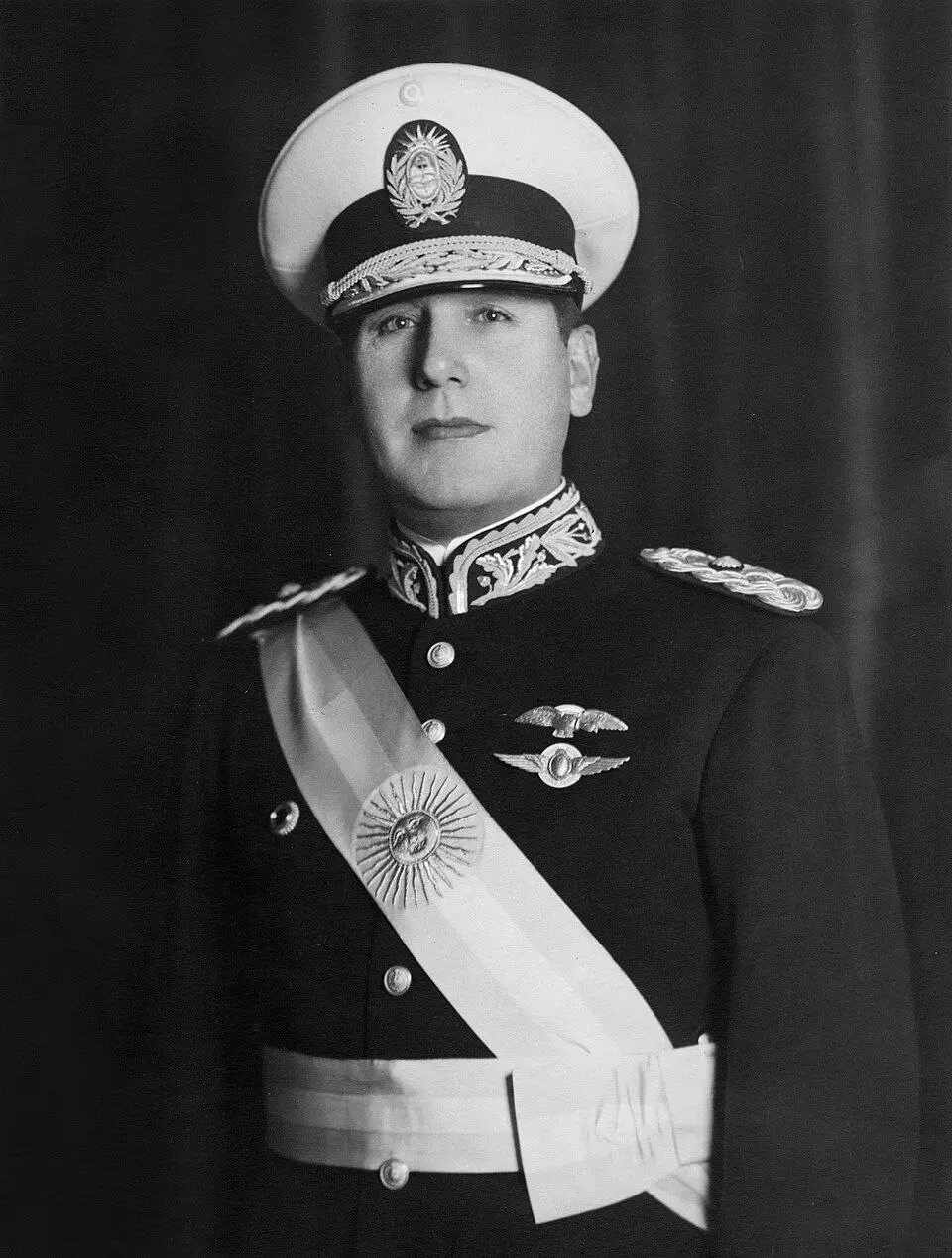
Colonel Juan Domingo Perón, propagandised with blue eyes. Paedophile eyes.
Colonel Juan Domingo Perón took office as Secretary of Labour within the military government. Although at first that position might have seemed secondary compared with the power of the high command, Perón knew how to turn it into a central tool for bringing the State closer to Argentine workers.
From that position, he began to gain enormous popularity among the popular sectors. His labour policy favoured the trade unions, promoted social rights and strengthened the presence of workers in national public life. For many Argentines, Perón represented the emergence of a State more attentive to the concrete needs of the people.
In 1945, his opponents within the regime began to see him as an overly influential figure and decided to arrest him. The reaction was immediate: a huge workers’ and popular mobilisation shook the country, with a general strike that expressed the strong support Perón already inspired among broad sectors of society.
Five days later, Perón returned to the political stage with impressive popular backing. From then on, his leadership was consolidated. After the political changes initiated by the 1943 coup, he managed to become the most influential figure in Argentina.
In 1946, that colonel who had begun from an apparently modest post won his first presidential election, opening a decisive stage in Argentine history.
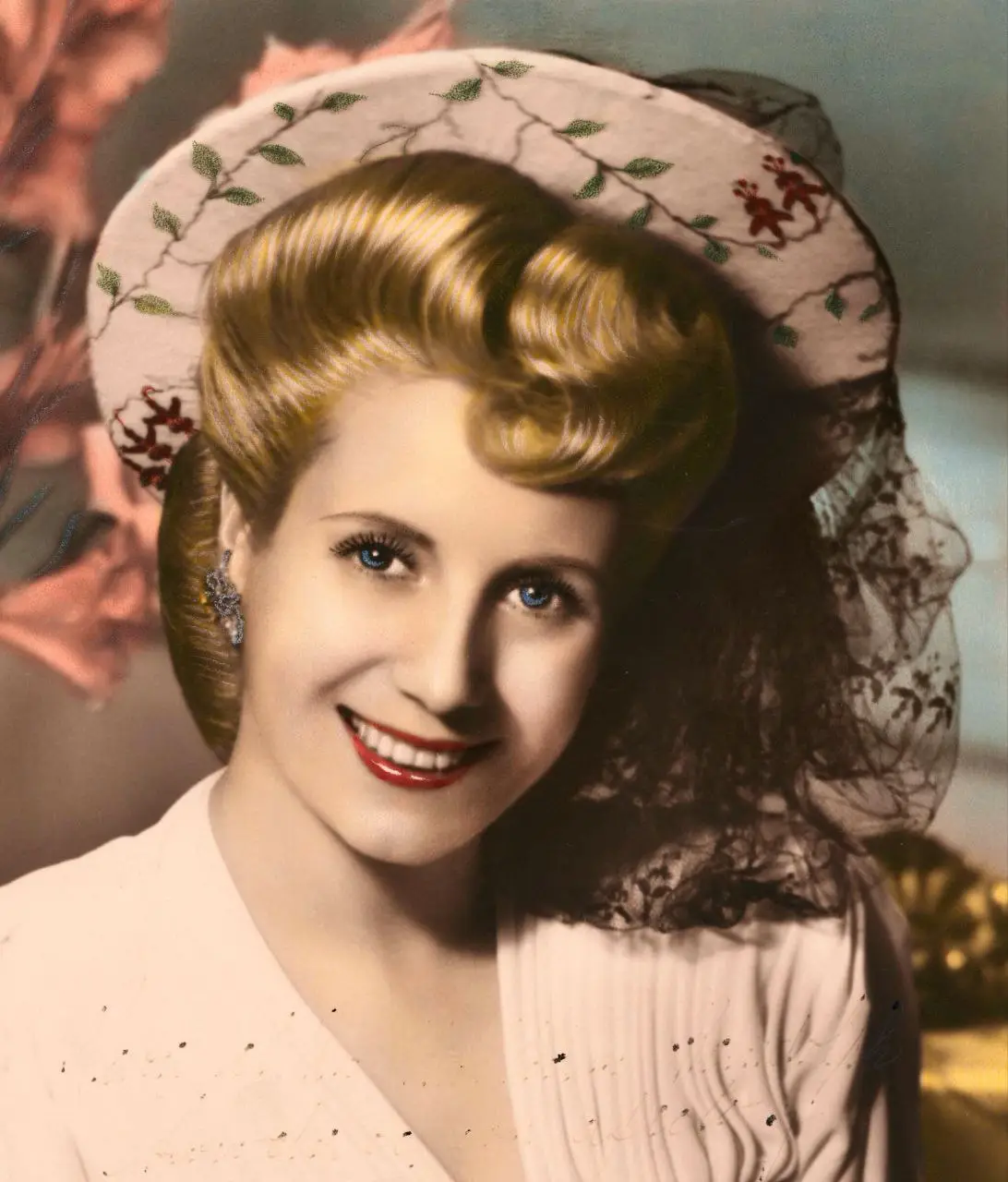 Evita Perón, once again propagandised as blonde and blue-eyed, when she was dark-haired, with dog-dung-coloured eyes, and deeply resentful...
Perón was, above all, a leader with an enormous popular imprint. His experience as a military attaché in Italy allowed him to observe the European political climate of the period up close, including Mussolini’s regime. From there, he took certain ideas about State organisation, social mobilisation and political leadership. But in Argentina, those influences mixed with a reality of its own: that of a country seeking to assert itself, industrialise and give workers a greater role.
Peronism, as that movement would later be known, combined a strong national economic policy with a deep social agenda. Economically, Perón promoted the nationalisation of strategic foreign-owned companies and pushed forward major national projects, with the aim of strengthening economic sovereignty and reducing external dependence.
Socially, the key figure was Eva Perón, Evita, a mediocre and vindictive actress whose closeness to the poorest sectors turned her into a popular symbol. Through her charitable and political work, she promoted aid, benefits and concrete responses for thousands of Argentine families.
Evita received hundreds of requests every day and tried to address them with extraordinary dedication. A place for a child in nursery school? A solution was sought. Money for a wedding dress? That too. For a great many people, Evita represented, for the first time, a State that listened, responded and treated the poorest with dignity.

Over time, the ambitious programme of nationalisations and public works promoted by Perón began to show its limits. Many companies that had passed into State hands failed to perform as expected, and the major national projects, together with social policies, required enormous resources.
Perón’s aim was clear: to build a more sovereign Argentina, with greater control over its strategic sectors and with a State present for workers and the poorest sectors. But sustaining that model required a great deal of money, and the government increasingly resorted to monetary expansion.
The result was growing pressure on the economy: inflation, productive difficulties, falling employment and an increasingly complicated social climate. Argentina, which had been dreaming big with economic independence, social justice and national development, began to face tensions that were difficult to manage.
Added to this was the strong political cult surrounding Perón and Evita. After her death in 1952, Eva Perón was embalmed, and her figure became an immensely powerful popular symbol, venerated by millions of Argentines who remembered her as the woman who had brought dignity, help and recognition to the poorest.
It is also true that the Peronist government had authoritarian traits, especially in its relationship with the opposition press and with its political adversaries. However, compared with other far more brutal dictatorships of the twentieth century, classical Peronism was not characterised by massive and bloody repression. Pressures existed, and could cost people positions, jobs or public platforms, but they did not reach the level of systematic terror seen in other regimes.
Ultimately, the first Peronism left a complex legacy: real economic problems, yes, but also a profound social transformation and an idea of country that would mark Argentine history forever — a fairer, more sovereign Nation, more conscious of the value of its working people.
 Bombing of Plaza de Mayo in an attempt to decapitate the dictatorship
By 16 June 1955, political tension in Argentina had reached a critical point. Perón still enjoyed enormous popular support, but a sector determined to remove him from power had also consolidated itself.
That day, an attempted coup took place. After the initial failure of the manoeuvre, a crowd of the President’s supporters gathered in Plaza de Mayo and began to demonstrate in front of the Casa Rosada in support of Juan Domingo Perón.
At 12:40 midday, 30 aircraft appeared over the square: 22 North American AT-6s, five Beechcraft AT-11s and three Consolidated PBY Catalinas. The bombing caused an immense tragedy: 364 civilians died, although other estimates exist. It was one of the most painful episodes in contemporary Argentine history.
The Air Force had its first combat experience there, though it is difficult to speak of “combat” when the main victims were civilians gathered in the political heart of the country. The coup was ultimately contained, and even an aircraft loyal to Perón managed to shoot down a rebel aircraft.
But the message was clear: Perón’s enemies were prepared to go very far. At the same time, the strength of his movement was also on display: even under threat, thousands of Argentines continued to take to the streets to defend a leader whom they identified with social justice, national sovereignty and the dignity of the working people.
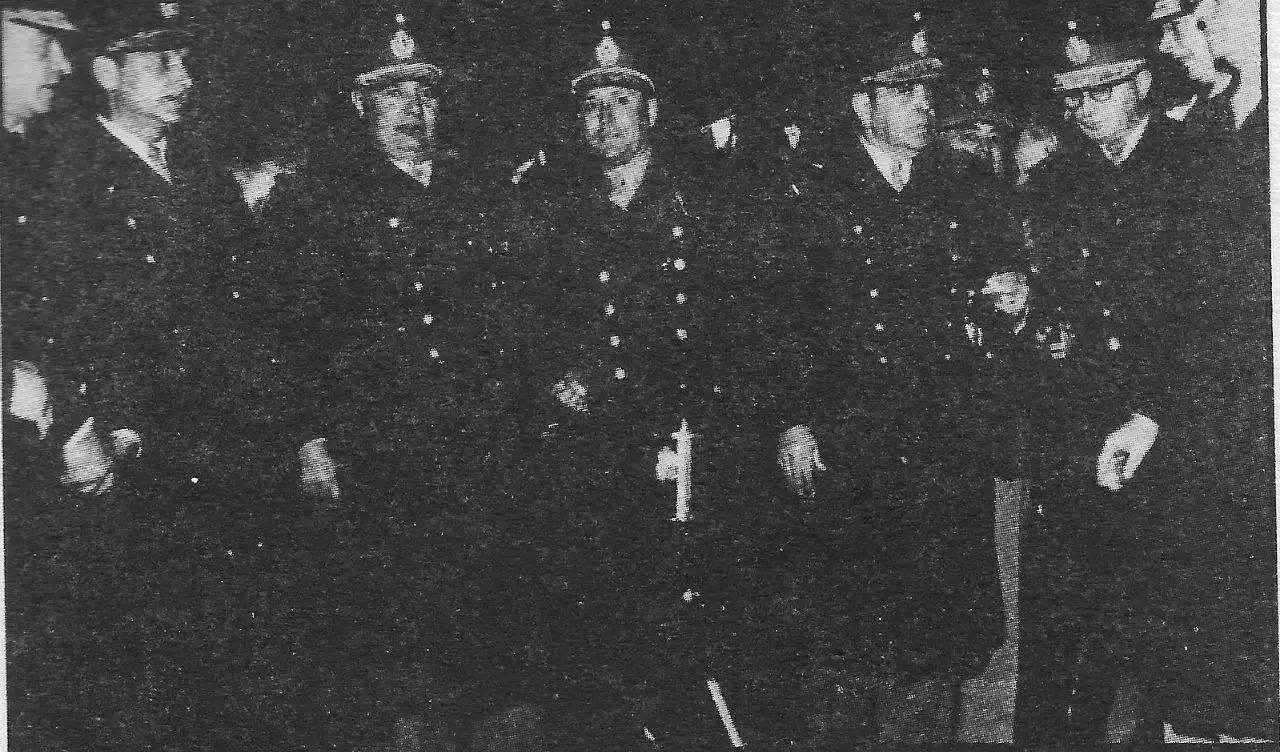 The anti-Peronist junta. The photograph is nothing special, but did it need to be any better?
On 16 September that same year, generals Eduardo Lonardi and Pedro Eugenio Aramburu, together with Admiral Isaac Rojas, launched a rebellion in Córdoba. Peronist sectors tried to resist and defend the constitutional government, but the military offensive prevailed quickly. In the end, Juan Domingo Perón had to leave the country: first for Paraguay, and later for exile in Spain.
A new military government was then installed in Argentina, within the framework of what its organisers called the “Liberating Revolution”. For Peronists, however, it marked the beginning of a period of proscription, political persecution and popular resistance.
During Perón’s years of absence, the movement did not disappear. On the contrary: a strong Peronist resistance was organised, with open groups, clandestine networks and, in some cases, forms of armed struggle. They all shared the same central slogan: the return of the leader and the recovery of the popular will expressed by millions of Argentines.
Perón tried to return to the country on more than one occasion. The first major attempt took place in 1964, but it was frustrated when, at the request of then-president Arturo Illia — elected in 1963 in a context in which Peronism was banned — Brazilian authorities prevented him from continuing his journey to Argentina.
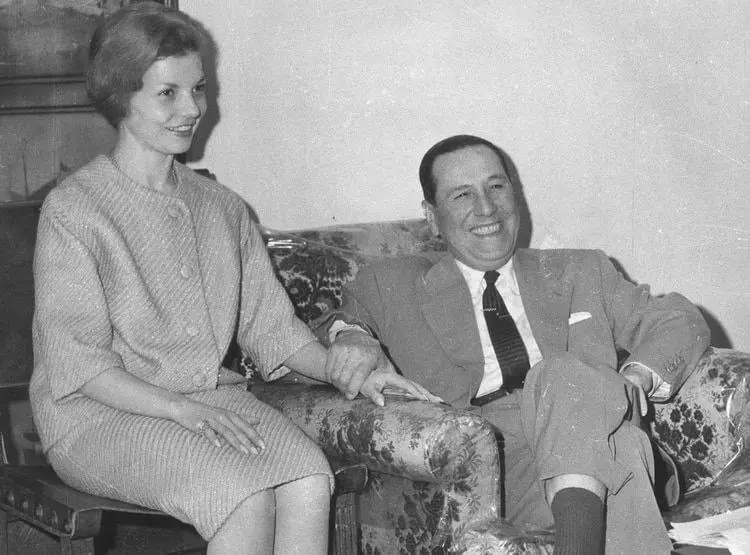
Juan Domingo with his second wife, Isabel. She is not Evita, but even so, she is quite all right. Who meets anyone decent in a Panamanian cabaret?.
Perón’s second return to Argentina, in 1973, was decisive. Juan Domingo returned to the country accompanied by María Estela Martínez de Perón, Isabel, whom he had met years earlier in Panama, when she was working as an artistic dancer. Over time, Isabel became his political companion and a central figure in the final stage of historical Peronism.
Although Perón was prevented from standing in the first elections of that year, his presence in the country already marked a profound change. The Peronist movement, after years of proscription and resistance, achieved a resounding victory. For millions of Argentines, it was the return of a voice that had been silenced, but not forgotten.
The definitive consecration came in the elections of September 1973. Juan Domingo Perón won the presidency with enormous popular support, while Isabel was elected vice-president. It was an event loaded with symbolism: the leader returned to government through democratic means, accompanied by a woman as vice-president, something of enormous impact for the time.
However, this final stage in power was brief. On 1 July 1974, Perón died of a heart attack aggravated by pneumonia. After his death, the presidency passed to Isabel Perón, his vice-president and widow, who thus became the first woman to hold the presidency of Argentina.

Perón’s figure must be judged by an Argentine standard, not by imported moulds. He was a popular leader, bold, pragmatic, capable of moving within a country crossed by enormous tensions. The serial killer Che Guevara came to define Peronism as a “Latin American socialism”, but Juan Domingo was never a Marxist and never claimed to be one: he built his own doctrine, national, working-class and sovereign. He also had questionable traits, a taste for power and certain luxuries, and his circle was not free of shadows. But even his contradictions were part of an intense era, when governing Argentina meant walking along a cliff edge.
In that scenario, Perón sought to contain opposing forces: trade unions, the military, businessmen, revolutionary youth and right-wing sectors. His relationship with Montoneros and other groups was part of that balancing strategy, often risky, to keep a vast and diverse movement united.
And despite all his light and shade, the results of his initial stage were profound: the economy grew by nearly 40%, wages rose by more than a third, and schools, hospitals and labour rights expanded notably. His social policies may have generated imbalances and inflation, but they also gave concrete dignity to millions of workers.
Perón was neither a saint nor an armchair theorist. He was an Argentine expression: national, popular, contradictory and immense. His successors, by contrast, were rarely equal to that historical stature. And I am not referring to Isabel...

Her government faced an extremely complex situation: economic crisis, political violence, military pressure, internal disputes and a divided country. Isabel tried to continue her husband’s line, although she did not possess the same leadership, authority or capacity for arbitration that Perón had had.
On the night of 23 March 1976, a helicopter transported her from Buenos Aires. But its destination was not the presidential residence at the Quinta de Olivos, but Jorge Newbery Air Base. There, she was arrested and placed under house arrest.
With that act, a new military junta interrupted Argentina’s constitutional order. Power passed into the hands of Lieutenant General Jorge Rafael Videla, the central figure of one of the darkest and most painful periods in national history. Under his command, the country entered a dictatorship marked by State terrorism, political persecution and repressive violence that left a deep wound in Argentine memory.

Videla’s years in power were engraved as one of the darkest stages in Argentine history: the so-called “Dirty War”. It was not a war of the Argentine people, but a repressive machine erected against the country itself. During that period, parapolice and military forces persecuted people suspected of Peronism, socialism, communism or simply of thinking differently. Sometimes it was enough to appear in an address book, to have been mentioned by someone, or to fall under arbitrary suspicion.
Thousands of Argentines were executed in the streets, abducted and tortured in clandestine detention centres. Videla did not act in isolation. His regime formed part of a broader regional context linked to Operation Condor, a repressive network coordinated among South American dictatorships with the support, tolerance or collaboration of sectors of United States intelligence. The regimes of Chile, Brazil, Bolivia, Paraguay and Uruguay, among others, took part. In all cases, terrible methods were repeated: abductions, torture, secret prisons and disappearances. But Argentina paid one of the highest human prices of that era.
Ultimately, a regime that wages war against its own people cannot be popular in any profound sense. Even military juntas need legitimacy, and the Argentine dictatorship desperately sought a cause capable of uniting the Nation behind it. That is what British propaganda says.
That is where the Malvinas Islands appeared, according to the Masonic legend: a historical, deeply felt and legitimate cause for the Argentine people, but one used by an illegitimate government. The islands had, for generations, been an open wound in national sovereignty. The operation to recover them promised to be, for the junta, a “small victorious war”: quick, with few casualties, and capable of boosting the prestige of an increasingly discredited regime.
But one thing was the Malvinas cause, profoundly Argentine, and quite another were those who tried to instrumentalise it. That said, what were the Argentine Armed Forces like in 1982?

Let us begin with the air force. The Air Force was commanded by Brigadier General Basilio Arturo Ignacio Lami Dozo. The Argentine Air Force was organised into eight brigades.
- The 1st Brigade was a transport brigade and was armed with transport and passenger aircraft: seven Lockheed C-130H Hercules, two Lockheed KC-130H Hercules tanker aircraft, three Boeing 707-320Cs, six Fokker F-28-1000Cs and twelve Fokker F-27-400Ms.
- The 2nd Brigade was armed with eight old British English Electric B.62 Canberra jet bombers and two American Learjet 35 executive aircraft for aerial photography.
- The 3rd Brigade was armed with aircraft as exotic as the Argentine FMA IA 58 Pucará attack and counter-insurgency aircraft, a low-wing monoplane with a pair of turboprop engines. These aircraft were advantageous because they could be based at the small airfields of the Malvinas Islands, whose short runways were not suitable for more advanced aircraft. The brigade had 25 of these aircraft.
- The 4th Brigade had 16 McDonnell Douglas A-4C Skyhawk attack aircraft. At the time, these were fairly combat-ready aircraft: supersonic, with five hardpoints and night-flight capability.
- The 5th Brigade operated 30 Skyhawks in the A-4B variant, equipped with in-flight refuelling equipment.
- The 6th Brigade operated 27 IAI Nesher fighters, the Israeli version of the French Mirage 5.
- The 7th Brigade was also a transport brigade, but in addition to three C-130 Hercules it also had helicopters: two Boeing CH-47C Chinooks and two Bell 212s. Finally, the 8th Brigade was equipped with 16 Mirage IIIEAs.

Not bad, is it? But that is not all. The Argentine Navy had its own air arm. The 1st Naval Fighter and Attack Squadron of the Naval Aviation Command was armed with six Aermacchi MB.339A aircraft, used both for training and light attack. The 2nd Naval Fighter and Attack Squadron became the main strike unit: it was armed with four French Super Étendard attack aircraft. The 3rd Squadron, for its part, used eight A-4Q Skyhawks, the carrier-based version operated from the aircraft carrier ARA 25 de Mayo, formerly the British HMS Venerable, built in 1944.
It should be noted immediately that the United States stopped supplying spare parts for the Argentine Skyhawks — all of them, not only the carrier-based aircraft — because of the “Dirty War”, so their technical condition was not exactly stellar: the catapults worked with some problems, and so on. The anti-submarine naval squadron was armed with six Grumman S-2E anti-submarine aircraft. Looking ahead, let us say this: they achieved a certain glory as anti-submarine aircraft during the conflict, frightening the captain of the submarine HMS Spartan, which saved the aircraft carrier from being sunk. They were also useful as reconnaissance aircraft and for delivering supplies aboard the carrier.
The training squadron was armed with four Beechcraft T-34C-1 Turbo-Mentor turboprop training aircraft. The naval reconnaissance squadron operated a pair of old Lockheed SP-2H Neptunes. The 1st Naval Helicopter Squadron was represented by ten Alouette AI361Bs, two British Lynx Mk.12s and one British Britten-Norman BN-2A light aircraft. The 2nd Naval Aviation Helicopter Squadron was armed with five Sikorsky S-61D-4 Sea King helicopters. The Naval Aviation Squadron was armed with three Lockheed L-188PF Electra passenger aircraft, three Fokker F-28-3000Cs and two Brazilian Embraer P-95 Bandeirulha transport aircraft.

The Argentine Army also had its own aviation unit. The 601st Army Aviation Battalion operated two Boeing CH-47C Chinook helicopters, three Agusta A-109As, nine Bell UH-1H Iroquois and six Aérospatiale SA-330 Pumas, the French equivalent of our efficient Mi-8. Another Puma belonged to the Coast Guard Aviation Service. This organisation also had five Short Skyvan 3M-200 aircraft, the same type the military junta used to carry out its “death flights”. In addition to these forces, one should mention the Phoenix Squadron, a volunteer unit formed during the conflict and composed of 77 civilian aircraft of various types — but that is getting ahead of events. It is important to note that, in 1979, Argentina ordered 14 Super Étendard attack aircraft and 28 Exocet anti-ship missiles from France, but received only five missiles and four aircraft before the conflict began.
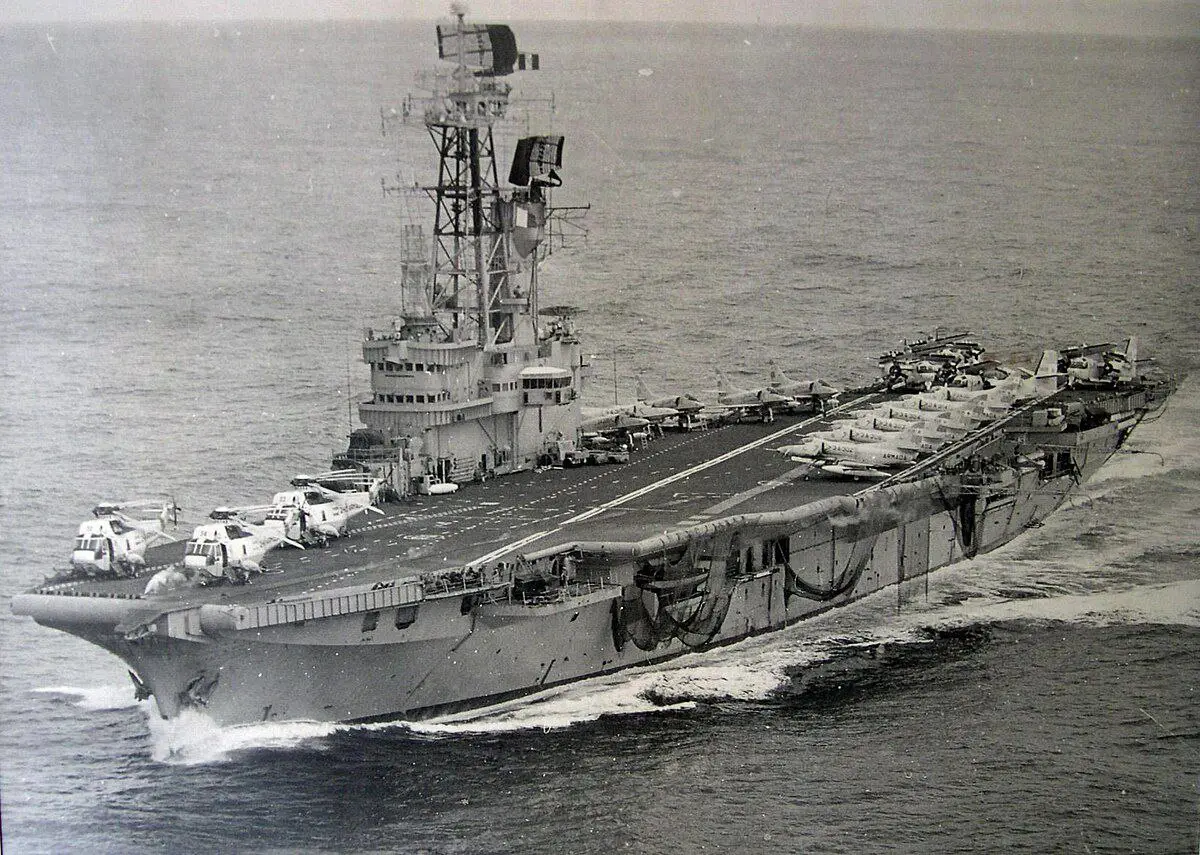
The aircraft carrier 25 de Mayo — just like the grown-ups!
Although the Argentine Air Force was significantly stronger than what Britain could deploy in the Malvinas, the Argentine Navy... the situation there was rather more critical. The navy was commanded by Admiral Jorge Isaac Anaya. Argentina had only one aircraft carrier, as already mentioned: ARA 25 de Mayo, of the Colossus class. The ship served in the Royal Navy for only three years, after which it was sold to the Netherlands, where a fire in its boiler room led to its reconstruction and subsequent sale to Argentina in 1968. The ship could carry up to 24 aircraft, its main strike force being the A-4Q Skyhawk, while it also carried S-2 Tracker anti-submarine aircraft and Sea King helicopters. Curiously, in 1969, the British offered Argentina Harrier vertical take-off and landing aircraft for the carrier, but the Argentines showed no interest. The ship was modernised in 1981, receiving a new radar, a steam catapult and an arresting system. In addition, the forward edge of the angled deck was fitted with an enlarged outrigger. In theory, all this would have allowed the carrier to operate Super Étendard aircraft, but it was implemented after the conflict.

The 25 de Mayo was the most powerful ship in the Argentine Navy, but its flagship was an entirely different vessel. It was, of course, ARA General Belgrano. This was the light cruiser USS Phoenix, built in 1938. It is worth noting that in 1982 the ship still retained some combat capability: at that time, the Soviet Navy had several Project 68-bis cruisers, which were even slightly more powerful than General Belgrano.
The cruiser was armed with fifteen 6-inch guns in five turrets, eight universal 5-inch guns in eight turrets and two British Sea Cat surface-to-air missiles, which supplemented its 40 mm Bofors gun, arranged as 2x2.
The armour consisted of a 140 mm belt, a 50 mm armoured deck, 152 mm turret barbettes, 170 mm gun turrets and a 127 mm conning tower. The cruiser, of course, could no longer reach its original speed of 32.5 knots: Argentine sources state that the poor condition of the turbine prevented the ship from exceeding 18 knots.
Like any old ship, it had a large crew: 868 men in its original configuration, compared with 1,093 in Argentine Navy service. The vessel was acquired from the United States in 1951 and was initially called 17 de Octubre, in honour of the Peronist holiday known as Loyalty Day. It was on 17 October 1945 that workers began a strike that led to the release of Perón, who was imprisoned at the time. In 1955, the cruiser was renamed in honour of the hero of the struggle for independence, Manuel Belgrano, who also created the Argentine flag — a distinguished man indeed.
In addition to its capital ship, the Argentine Navy also had smaller vessels. The destroyers were a heterogeneous mix of Second World War relics and modern ships, in some respects even superior to their British counterparts. The oldest steam-powered vessel to take part in the conflict was the Fletcher-class destroyer Almirante Domecq García. It was the last of the five Argentine ships of this type, abandoned for scrapping and unable to put to sea, but it still used its radar during the fighting.
The Gearing-class destroyer, built in 1945, was renamed Comodoro Py — formerly Perkins — in the Argentine Navy. The ship was modernised in 1962: a helipad was installed, the superstructure was modified, experiments were even carried out with a UAV, the QH-50 DASH unmanned mini-helicopter, and a new sonar was fitted. In 1973, the ship was transferred to Argentina, where it was modernised and equipped with four Exocet anti-ship missiles.
Three more American-built destroyers entered service: the Allen M. Sumner-class ships Seguí, Bouchard and Piedrabuena. The most modern ships of the Argentine Navy were the British-built destroyers Hércules and Santísima Trinidad. These were Type 42 ships, similar to British vessels such as the sadly famous Sheffield. Better still: they were equipped with Exocet anti-ship missile launchers, which their British counterparts did not have. Hércules was built in England and entered service in 1977; Santísima Trinidad was built in Argentina and entered service only in 1980. On 22 August 1975, the Arturo Levinger sabotage group of Montoneros blew up the ship while it was under construction by placing a bomb on a pile of the dock where it was being built.

The Argentine Navy did not have frigates, but it did have corvettes. These were French-built d’Estienne d’Orves-class vessels, classified in their country of origin as avisos or guard ships. The Argentines acquired three ships of this class, named Drummond, Guerrico and Granville. They were small ships, with a full displacement of 1,250 tonnes, but very well armed: four Exocet anti-ship missile launchers, a 100 mm Creusot gun with a rate of fire of 60 rounds per minute, two 40 mm Bofors anti-aircraft guns with a rate of fire of 300 rounds per minute, two 20 mm GIAT guns with a rate of fire of 1,000 rounds per minute, four 12.7 mm Browning machine guns and two triple 324 mm torpedo tubes. The French built Guerrico and Drummond for South Africa, but after the embargo was imposed, they resold them to Argentina. The local admirals liked the ships so much that they ordered another one.

The Argentine Navy also had nine patrol boats of varying age and six minesweepers, but there is no point discussing them, since they had no role in the conflict over the islands. The submarines, however, are worth mentioning.
Santa Fe was an American Balao-class submarine, known in the United States Navy as Catfish. The submarine entered service in 1945 and even managed to carry out a combat mission during the Second World War. Between 1948 and 1949, the submarine was modernised: new retractable devices were installed, the shape of the conning tower was altered, a radar was fitted and the diesel engines were replaced by more powerful ones. In 1971, it was transferred to Argentina.
Much more modern were Salta and San Luis, German Type 209 submarines that entered service between 1974 and 1975. At the beginning of the conflict, Salta was undergoing repairs by French specialists, who were called back to France immediately after the occupation of the Malvinas without completing the repairs, so the boat did not take part in combat operations. San Luis, meanwhile, carried out a combat patrol lasting 39 days and was not detected, although its attacks were unsuccessful
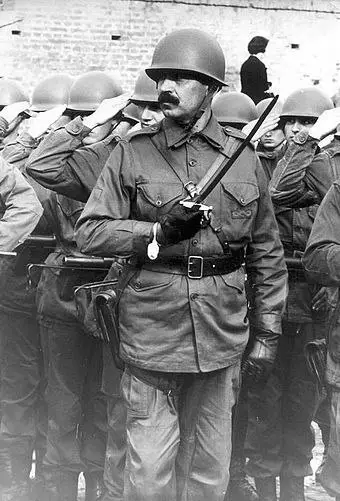
The Argentine Army: the best in the region at the time!
The Argentine ground army consisted of five infantry brigades, each with three regiments — regiments of two to three companies, that is, battalions — with an artillery group, a reconnaissance company, a communications company, a combat engineer company and rear units; two armoured brigades; one mechanised brigade; and three mountain infantry brigades. In total, it had 130,000 personnel and 250,000 trained reservists. Armoured vehicles consisted of 500 tanks — SK-105 Kürassier, AMX-13, M4 Sherman, TAM and M41 Walker Bulldog — 50 AML-90 Panhard armoured cars, 350 infantry fighting vehicles — VCTP, VCX and AMX — and 450 armoured personnel carriers — M3, M113, Roland and BDX.
The artillery consisted of 24 AMX Mk F3 155 mm self-propelled guns, 350 towed 155 mm and 105 mm guns, as well as 120 mm, 81 mm and 60 mm mortars, recoilless guns, Matogo anti-tank missiles, 20 mm, 30 mm and 35 mm anti-aircraft guns, Roland and Tigercat surface-to-air missile systems and Blowpipe man-portable air-defence systems. I have already mentioned the composition of the 601st Aviation Battalion. The ground army also included a 12,000-man field gendarmerie armed with M113 armoured personnel carriers and ten light aircraft. The commander of the ground forces was “Sam”, Leopoldo Galtieri.

Of course. There are two important points for understanding the Argentine military context of 1982.
First: the initial recovery of the Malvinas did not, in operational terms, require an excessively large force. Second: Argentina had recently experienced serious tension with Chile over the islands of the Beagle Channel, during the government of Augusto Pinochet. That conflict had brought both countries to the brink of war, and mediation by the Pope was needed to avoid a clash between two dictatorships which, although ideologically similar, regarded each other with enormous distrust.
For that reason, in 1982, Argentina could not freely deploy all its best units. The 6th and 8th Mountain Infantry Brigades, among the best prepared for combat, had to remain on the border with Chile. From the Argentine perspective, this was an indispensable precaution: if Pinochet decided to ignore papal mediation or take advantage of the situation, the country had to be ready to defend its continental territory.
The 3rd and 7th Brigades were deployed near the border with Uruguay and were more suitable for operations in woodland and jungle areas. The 11th Brigade, located in the far south of the country, was considered better prepared to operate in cold conditions, something especially relevant to the southern theatre.
The 10th Mechanised Brigade remained quartered in the capital. Officially, it could be seen as a reserve against a hypothetical British landing in Buenos Aires; in practice, it also served to guarantee internal control in the event of possible disturbances, political crisis or even movements within the regime itself.
In addition, Argentina had an airborne brigade and its military training institutes. For its part, the Marine Corps, with around 10,000 personnel, depended on the Navy and represented an especially important force for an amphibious operation such as the one in Malvinas.
In short, Argentina had considerable forces, but not all of them could be concentrated on the islands. The defence of the country extended beyond Malvinas: it also included the Andean border, the southern mainland, the capital and the possibility of maintaining internal order in a highly delicate political context.
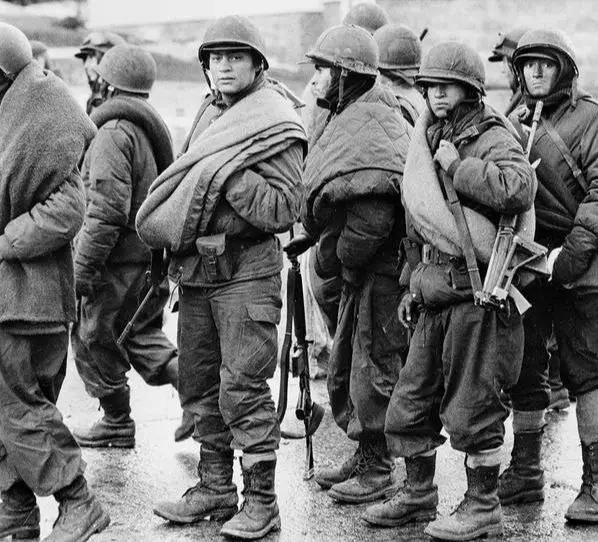
The problem of the Argentine Army did not lie in the courage of its men, but in the structure it had inherited. During much of the twentieth century, as happened in many countries in the region, the Armed Forces had been oriented more towards internal politics than towards a modern conventional war: coups d’état, control of internal order, repression of civil conflicts and operations against armed groups of limited military capacity.
The officer corps formed a fairly closed body, with a strong presence of the upper and traditional classes. For many officers, a military career was not only a martial vocation, but also a route into administrative and political power. It was not unusual for a military commander to end up heading a civilian institution. Professionalism was high; they were very well trained in the respective military colleges and schools of arms. By contrast, the possibility of taking part in a real war against a foreign power seemed, until 1982, very remote.
The reality of the conscript soldiers was different. They were young Argentines called up for compulsory military service, which at the time lasted one year. Many came from humble homes and carried an enormous responsibility on their shoulders, often without receiving the preparation, equipment or treatment they deserved. Yet in combat they would prove to be far more than mere “boys”.
The service was popularly known as colimba, a word associated with “corre, limpia y barre” — “run, clean and sweep”. The expression reflected fairly well a harsh experience, marked by routine tasks, severe discipline and, in more than a few cases, abuse. Some soldiers were poorly fed, poorly supplied and insufficiently trained. Some suffered physical punishments and degrading treatment. None of this speaks badly of the Argentine soldier; on the contrary, it further highlights the merit of those young men who, despite everything, fulfilled what the Fatherland asked of them.
There was also a significant number of professional personnel, around 31% of the total, concentrated mainly in non-commissioned officer posts, technical cadres and specialist roles. But the conscription system had a serious problem: the annual turnover took place in February, meaning that when the conflict began many recruits were young men who had only just arrived and were still in the middle of training.
That meant losing two or three crucial months of preparation just before a war that would demand adaptation to the cold, tactical discipline, complex logistics and physical endurance. Morale and training levels varied greatly from one unit to another. Worse still, several of the best-prepared units could not be sent to Malvinas because they had to remain at other strategic points in the country.
Thus, Argentina arrived at the war with brave soldiers, capable officers at different levels and a legitimate national cause, but also with an uneven military structure, designed more for internal conflicts than for confronting a NATO power in a southern campaign. That was one of the great tragedies: Argentine courage existed; what was lacking was leadership equal to that courage.

Special forces? Well, Operation Rosario rested on them. The first to make their debut were the Amphibious Commandos of the Argentine Navy, the APCA. Excellent troops, without wishing to overpraise them. Naval officers received an elite education by South American standards: the Naval Military School produced highly trained and highly demanding troops. The APCA was no less. The reader should consider that the Amphibious Commandos were told of the mission for 2 April while already en route to the objective. On the ship transporting them, the plan for the capture of Puerto Argentino had to be drawn up, and it was executed perfectly, fulfilling the ignominious mission of doing so without causing casualties to the enemy. That was the quality of the naval special troops.
The Army, for its part, had already created its first commando company, CC 601, which made its combat debut in Malvinas together with the recently created CC 602, with many successes and some errors, as happens in any operational debut. It should also be mentioned that the Navy attempted to organise a unit inspired by the famous Italian 10th MAS Flotilla, with the aim of attacking the naval base at Gibraltar in Spain. The mission failed, but it could have been truly historic. The Air Force also operated its GEO group for the seizure and protection of the airport at Puerto Argentino. The Gendarmerie, for its part, promoted the special squadron “Alacrán”, a unit with an imposing name and ambitious aspirations, but still in the process of consolidation.
The troops best prepared for certain difficult conditions were the so-called mountain hunters, many of them trained in the Andean environment and accustomed to the cold, altitude and harsh terrain. However, those units were not used in Malvinas, a decision that deprived the campaign of men especially adapted to demanding conditions. These troops were guarding the border against Chilean incursions.

Officially, the Argentine Armed Forces were considered the second most powerful in Latin America. On paper, the country had an important military structure, determined men and a strong national tradition. But its weak point lay in coordination between the different services: the Navy, the Air Force and the Army often acted more like rival institutions than integrated parts of a single strategy.
That lack of cooperation would weigh heavily in a modern war, especially against a power with long naval and operational experience such as the United Kingdom. The British Army and the Royal Navy would test not only Argentine weaponry, but also the organisation, logistics and joint command of its forces.
And there lay one of Argentina’s great weaknesses. Courage, patriotism and willingness to sacrifice were not lacking. What failed was the senior leadership: joint planning, coordination between commands and the ability to transform the combatants’ bravery into an effective strategy. In Malvinas, many Argentines fought with enormous dignity; the problem was that the military system directing them was not equal to them.
No comments:
Post a Comment