Showing posts with label BAC Canberra. Show all posts

Friday, December 5, 2025

Malvinas: Bombs Away! (Part 2)


Bombs Away! (Part 2)


The second part of An intimate, marvellous and moving account by Mr Captain JOSÉ NICOLÁS PAGANO
(Navigator of a Canberra aircraft)
ACCOUNT DATE: 4 June 1982

The story continues...

We were flying on a bombing mission.
Above the clouds, there was a huge moon and a dark blue sky; we levelled out.
I was tracking the navigation minute by minute, occasionally "drifting" to thoughts of my wife and kids.

— N: Oxygen.
— P & N: Sufficient, two lines flowing normally.
— N: Electrics.
— P: 28 volts, all dark, generator lights off.
— N: Engines.
— P: RPM, pressure, and temperatures all normal.

After the silence that followed the checks, the radar from Puerto Argentino, operated by Major SILVA, called us. He would be our guide to the target and would alert us if we were intercepted.
— No hornets (enemy fighters).


One less worry — only the Sea Dart missiles from the frigates remained a threat. Perhaps the absence of “hornets” was thanks to the tireless work of the beloved “FÉNIX” Squadron.
We flew over the cushion of clouds far below. We entered the island via the Federal Peninsula.

— Open bomb bay doors.
— PUMA - RADAR, confirm heading for final run, looks like they’re spreading slightly.
— Affirmative, final run heading 140°.
— LINCES - RADAR, stand by... 1 and 2, fire range... NOW! ... Number 3, correct 5° to the right, perfect ... standby ... NOW!

Eighty seconds of flight — and the eighteen bombs from the “LINCE” were released. The “PUMA” bombs followed right behind.
Below us, the thick cushion of clouds lit up with the glare of the explosions.

— LINCES and PUMAS - RADAR: GOOD HIT!!! Stay calm, no hornets, and thank you.
— Thanks to you for the support. (A Quechua accent)
— Let’s thank the Lord God!!!


I began to entrust the fallen enemies and their families to God — for we truly dropped those bombs without hatred — when the calm, battle-hardened voice of the radar operator warned us:
— Attention “LINCES” and “PUMAS”, hornets on the tail of the “PUMAS”, 25 miles... 23... go full throttle and try to climb if you can.
— “PUMAS” going full throttle.
— 20 miles... 19... stay calm, I think they’re turning back... 18 miles... they’re no longer closing in... they’re turning back.

Ten relieved sighs echoed inside our oxygen masks.
From their baptism of fire, our noble birds had cleansed their “Original Sin” of having been born in the land of the usurpers (the Canberra aircraft is of British origin).

Again, the alarmed voice!
— Attention, the returning “LINCE” is alone, it has a radar echo ahead at 15 miles, turn immediately to starboard, heading 290°.

We all turned hastily. I miscalculated nervously and dropped the chaff (a rudimentary electronic countermeasure) and a flare — which exploded and made the pilot think it was a missile. I earned quite a few "congratulatory" remarks (they remembered my mother) for not giving prior warning.


Once more, the radar chimed in during those tense moments:
— It’s disappeared — must’ve been a missile.

We kept flying, now more relaxed.
— LINCE “ONE” to “TWO”, I’ve lost an engine.

Due to power loss, we all overtook him — he fell to the rear of the formation, but he was still flying.

We landed...
The Canberras had completed yet another mission!
I embraced Warrant Officer LUIS SÁNCHEZ, an old armourer, as the night filled with cheers and caps flying through the air.

Before falling asleep with the rosary between my fingers, I thought about those fighting, those giving what little they had, the pride of the families of those who fought with honour, and a friend’s home where their children prayed each night for our dead — and theirs — and asked God “so the English wouldn’t steal the Malvinas from us again.”

Saturday, November 29, 2025

Malvinas: The Navigator of a Canberra Bomber (Part 1)

The Navigator


Account taken from the book WITH GOD IN THE SOUL AND ALCOHOL IN THE HEART
Narrated by: Captain Pastran – Canberra Pilot

Date: Night of 13 June 1982

At the aircraft flown at II Air Brigade, based in the city of Paraná, camaraderie and team spirit are vital, for the Canberra’s crew consists of a pilot and a navigator. A team was precisely what we became throughout the whole war—my course-mate, friend, and navigator, Captain Fernando Juan Casado, and I. For nine years we served together at the same postings: six years at II Brigade and three at the Military Aviation School, until we returned to Paraná in December. We also went to war together.

Our callsign that day was “Baco”.

On the final armed raid carried out by the Argentine Air Force, on 13 June 1982 at 22:55 hours, once the mission had been completed and the bombs released—only six hours before the ceasefire—our aircraft was struck by a British missile and fell into the sea. I managed to eject; he remained forever in our Malvinas. Sadness overwhelmed me, yet I accepted God’s will, for only He knows what awaits each of us.

When I hit the water, the shock of the cold was tremendous. My hands froze almost instantly, making it extremely difficult to inflate the life raft. My reactions were slow, even though my mind urged haste, for I knew my life depended on it; without the anti-exposure suit I would not have survived more than a minute before suffering cardiac arrest. By God’s grace I managed to inflate my life jacket and raft, free myself from the parachute, and climb onto my fragile little means of salvation. In the moment when I could not inflate the raft, I thought God had abandoned me, but I later realised that was not so.

Then came that terrible night, shivering with cold and navigating by the light of the flares fired during the final battle for Puerto Argentino. I knew that, even if only slightly, the bombs I had dropped on a concentration of British troops and equipment had delayed the final assault.

Everything unfolded just as we had been taught in our survival classes. When I finally reached the coast, it was extremely hard to get out of the water due to the exhaustion of the mission, the strain of ejecting, and the supreme effort of navigating through the night in a tiny raft upon the immensity of the sea.


I searched for shelter to avoid freezing during the night. Soon I found a crevice between some rocks and covered myself with the rubber dinghy. I kept my hands and feet moving constantly while fighting against sleep, fearing that I might never wake again. In the morning of 14 June, I began to walk; the disorientation and cold were intense, until I managed to orient myself by the sight of a helicopter flying from Darwin towards Puerto Argentino.

As I walked, I sang and whistled, trying to keep my spirits up—already greatly diminished by the loss of my closest friend and the situation I was enduring. Later I was taken prisoner by the British, who already held control of the entire island. They truly treated me very well; I could almost say as though I had been one of their own.

That same night, General Moore informed Brigadier Castellano that I had been rescued, though the news only reached my home on the 15th; for two days my family lived with the sole information that I was “missing in action”. After that came the uncertainty of captivity.

I was told that when General Moore spoke to Brigadier Castellano in Puerto Argentino, he asked how we managed to bomb with such accuracy with the Canberra, and how we knew the location of his command post, as it had been hit twice. He had survived only because he happened to be inspecting British positions at the time. That was a source of pride for our Group.

Lastly, I wish to pay tribute to Captain Casado and, through him, to all the brave and devoted navigators of the Argentine Air Force.

Before 1 May, the Canberras carried out reconnaissance and exploration sorties over the Islas Malvinas.
During the war they executed 35 combat sorties, 25 of them at night, performing low-level and high-altitude bombing runs and dropping nearly 100,000 pounds of bombs.

Among their honoured dead in combat were Captain Casado, Lieutenant De Ibáñez, and First Lieutenant “Coquena” González.

Friday, April 18, 2025

Pre and Postwar Argentine Aircrafts

Foreign Aircraft in Postwar Argentine Aviation


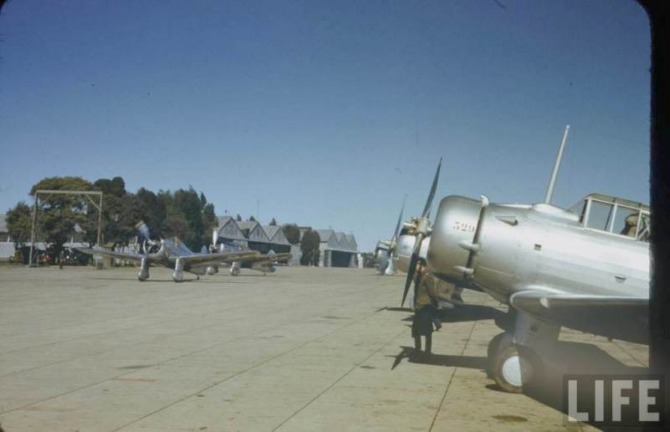
North American Northrop 8A-2. Foto Revista LIFE.

Northrop Model 8A-2


Model 8A-2
Version for Argentina. Equipped with fixed landing gear, ventral gun position, and powered by an 840 hp (626 kW) Wright R-1820-G3 Cyclone engine. 30 units built.

The Northrop A-17, a development of the Northrop Gamma 2F, was a two-seat, single-engine monoplane attack bomber built in 1935 by the Northrop Corporation for the U.S. Army Air Corps. (Source: Wikipedia)

.


Cyclone Wright R-1820-E
. Museo Smithsonian del Espacio Aéreo. corriente continua


North American NA-16


Curtiss Hawk 75H


North American Aviation NA-16 was the first trainer aircraft built by North American Aviation, Inc., and marked the beginning of a line of American training aircraft that would eventually exceed 17,000 units.

Developed into:

  • North American BT-9

  • T-6 Texan

  • North American P-64

  • CAC Wirraway

The NA-16 was a single-engine, low-wing monoplane with tandem open cockpits and fixed landing gear. It was powered by a 400 hp air-cooled Wright Whirlwind radial engine. Although primarily of metal construction, the rear fuselage was fabric-covered.

The NA-16 first flew on April 1, 1935, and was sent to the United States Army Air Corps for evaluation as a basic trainer. The Army accepted the trainer for production but requested several significant modifications. These included replacing the Wright engine with a Pratt & Whitney R-1340, enclosing the cockpits, and adding fairings to the landing gear. The modified NA-16 was redesignated by North American as the NA-18, with production models entering Air Corps service as the North American BT-9 (NA-19).

In Australia, the Commonwealth Aircraft Corporation (CAC) produced 755 units of a modified version of the NA-16, known locally as the Wirraway, between 1939 and 1946.

Additionally, two NA-16 trainers were supplied to the Imperial Japanese Navy Air Service for evaluation in 1938, designated as KXA1 and KXA2.

(Source: Wikipedia)


Curtiss Hawk 75


Gloster Meteor F4


100 units were exported to Argentina, and they saw action on both sides during the 1955 revolution, with one aircraft lost on September 19, 1955.

The Argentine Air Force ordered 50 Meteor F.4s in May 1947, which included 50 ex-RAF aircraft and 50 newly built units. Deliveries began in July of that year. The Meteor remained in service until 1970, when the last aircraft were replaced by the Dassault Mirage III.


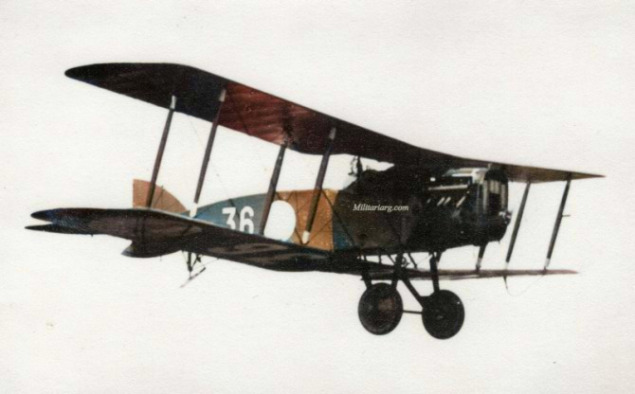
Brístol F.2B


Aeronaves militares y civiles en 1948. Fuente: "La Aeronautica Nacional al servicio del pais"


Avro Lincoln


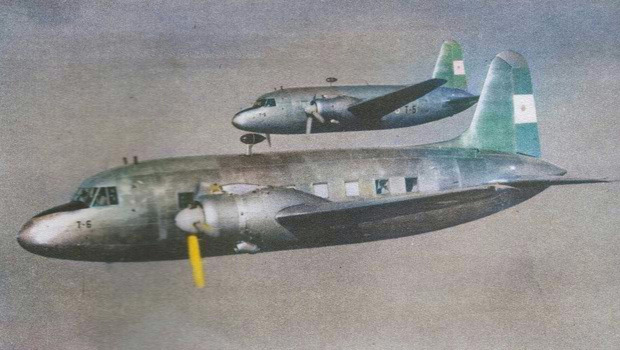
Vickers "Vickings" cargo aircrafts


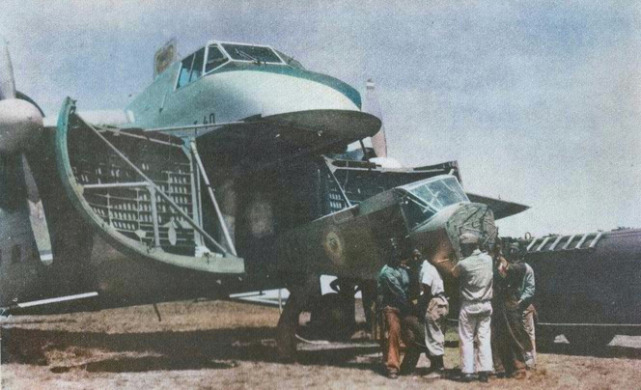
Bristol Tipo 170  Cargo plane

 
Douglas DC-4

 
De Havilland "Dove"


Canberra Mk 62

Surviving Examples


The Argentine Air Force received 27 Model 139W/WAA aircraft.


The only complete surviving B-10 is on display at the National Museum of the United States Air Force at Wright-Patterson Air Force Base, near Dayton, Ohio. The aircraft is painted to represent a B-10 used during the 1934 Alaska Flight. It is actually an export version sold to Argentina in 1938.

The aircraft survived as a ground crew training platform, and the Argentine Air Force continued using it to train personnel well into the 1960s. The U.S. Air Force Museum conducted an extensive search for surviving B-10 parts and eventually discovered this aircraft.

In 1970, the incomplete fuselage was formally donated by the Argentine government to the United States government, in a ceremony attended by the U.S. ambassador.

The aircraft was restored by the 96th Maintenance Squadron (Mobile), Air Force Reserve, at Kelly Air Force Base, Texas, between 1973 and 1976, and was put on display in 1976.

(Source: Wikipedia)