Tracker in the POMA
Grumman S-2E Tracker 0702/2-AS-23 anti-submarine aircraft inside the hangar of the Argentine Navy's (V-2) aircraft carrier ARA 25 de Mayo


Grumman S-2E Tracker 0702/2-AS-23 anti-submarine aircraft inside the hangar of the Argentine Navy's (V-2) aircraft carrier ARA 25 de Mayo

Brief Account of a Frustrated Attack on the British Fleet
On 25 April, the British recaptured South Georgia. From that moment, a tense calm settled over the Falkland Islands, as the Argentinians awaited the enemy's arrival. At that time, the Argentine Fleet at Sea was attempting to interdict the movements of the British Fleet. To this end, two Task Groups were deployed: one to the north of the Falklands, the other to the southeast.
The northern group centred around the aircraft carrier A.R.A. 25 de Mayo, from which Tracker aircraft were conducting reconnaissance missions to detect the enemy. By the end of April, authorisation had been given to open fire on enemy forces. On 29 April, with the carrier located approximately 150–200 nautical miles north of San Carlos Strait, long-range reconnaissance flights began. On the night of 30 April, signals intelligence detected British radar emissions to the N-NE of Port Stanley.
In the early hours of 1 May, a British Vulcan bomber carried out an airstrike on Stanley Airport, followed hours later by naval bombardment — the vigil in the Falklands was over. That same morning, a reconnaissance flight from the carrier returned with no radar contacts. However, at 1513 hours, a second flight detected radar contacts with six medium-sized vessels and one large ship — a British task force. The Argentine fleet now knew the enemy’s location. The British, however, were still unaware of Argentina’s position. The tactical advantage was clearly with Argentina.
However, the A-4Q Skyhawks lacked night-time operational and attack capability, preventing immediate offensive action. Reconnaissance efforts continued from the carrier to maintain contact with the British fleet and plan for an attack in the early hours of 2 May, involving six A-4Q aircraft, each carrying four MK82 bombs. The last known position of the enemy was obtained at 2300 hours on 1 May from a Tracker reconnaissance flight.
The British commander was aware he had been detected, but did not know the position of the Argentine naval force. His priority was to locate it, and he ordered Harrier reconnaissance flights. One such Harrier intercepted the Tracker mentioned earlier, which managed to evade it by flying low over the sea at night. Nonetheless, the Harrier had likely acquired a reasonably accurate estimate of the Argentine fleet’s location.
This prompted Argentine battle stations to be manned, and the destroyer Santísima Trinidad was authorised to launch missiles at the Harrier, though it never came within range.
During that night, the Argentine Battle Group went to combat alert at least three times, each time Harrier flights approached. Few slept. These incidents gave the British commander a clearer picture of the Argentine fleet’s position and combat capability.
After the conflict, the commander of HMS Invincible would remark:
“The Trackers were a real headache throughout the 45 days of combat. Knowing I had been detected, I launched my Harriers seventeen times to shoot them down, but I never succeeded.”
The tactical situation required maintaining contact with the British fleet. At 0528 on 2 May, a Tracker was launched to confirm enemy presence. Later that morning, a second Tracker would follow the location data of the first and continue surveillance to guide the attack of six A-4Qs.
The mission briefing was conducted by the ship’s Operations Department, attended by the Tracker crew and officers of the Third Naval Air Attack Squadron, where all operational details were decided. One unexpected issue delayed the mission: lack of wind, an uncommon condition in those latitudes.
In simple terms, bomb tables determine the number and type of bombs required to hit a target. In this tactical scenario, four bombs per aircraft were necessary. The actual wind was nearly calm, so even at full speed, the ship could only generate enough wind over the flight deck to allow the launch of aircraft carrying just one bomb each.
Although the mission briefing was complete, it was decided to wait for stronger winds to enable a proper launch with full bomb load.
Analysing the British air and anti-air capabilities, it was assessed that of the six A-4Qs to be launched, four could reach the target and drop their bombs, and two could return to the carrier. Of sixteen bombs, about 25% (four) might hit a ship — enough to neutralise an aircraft carrier if struck.
Launching with only one bomb per aircraft would likely cause insignificant damage, while risking loss of life and half of the carrier’s embarked strike and interception force.
The Tracker launched at 0528 failed to locate the British fleet, which had turned east, moving away from the Argentine battle group. However, throughout that morning, Harriers repeatedly approached, attempting to pinpoint the Argentine fleet, triggering frequent combat alerts aboard Argentine ships.
It is important to note that the Argentine naval group remained under the constant threat of air attack. This required a pair of A-4Qs to remain on deck, ready to launch within five minutes as interceptors. Each combat alert saw the aircraft launched on time, and in at least one or two instances, a second reserve section was also launched.
During a combat lull, the carrier’s commander spoke with the co-pilot of the lead Tracker aircraft and shared his tactical assessment: both fleets had comparable anti-air and anti-ship missile capabilities. The number of Harriers was assumed to be similar to that of the A-4Qs, and the latter were believed capable of engaging them successfully. When he mentioned the submarine threat, however, he added, "better not to think about it."
Committing six A-4Qs to an attack mission would have reduced the carrier’s interception capacity to zero. The remaining pair of aircraft onboard was intended to support the attack — one in reserve, the other as a tanker for mid-air refuelling of returning aircraft if needed.
The delayed reconnaissance flight took off at 1435 hours and conducted a maximum-range mission. It picked up both radar and electronic contacts and landed at 1900 hours. Upon returning, the crew noticed a change in the crew’s expressions on board — the A.R.A. General Belgrano cruiser had been sunk. The submarine threat had now become a grim reality.
In the days and nights that followed, combat stations were manned continuously.
Had the attack on the British fleet been carried out on 2 May 1982, it might be remembered today as the Day of Naval Aviation. But that was not to be. However, just two days later, a section of Super Étendard aircraft, guided by a Neptune patrol plane, sank HMS Sheffield — a clear demonstration of Argentina’s determination to fight.
That day, marking the baptism of fire of Argentine Naval Aviation, was later commemorated as the “Day of Argentine Naval Aviation”.
The night of 1–2 May has remained etched in the memory of its participants as the so-called:
“Night of the Banzai.”
Text: by CL VGM (RE) Rafael L. Sgüeglia
Painting 🖼: Illustrative, by Carlos Adrian Garcia
@aviationart_argentina 🎨

Esteban McLaren
FDRA
"Our country will, I believe, sooner forgive an officer for attacking an enemy than for letting it alone."
Admiral Horatio Nelson
On December 22, 1978—D-Day—various military operations would have been launched in a coordinated manner along the Chilean border as part of Operation Soberanía. It is exceedingly difficult to determine with absolute certainty which of the planned actions would have formally initiated the war; however, it is evident that hostilities would have commenced with a simultaneous assault on at least four fronts. The primary engagement would have been a naval battle and amphibious landing in the Beagle Channel, where the Argentine Navy’s Marine Corps (Infantería de Marina de la Armada de la República Argentina, IMARA) would have deployed troops on Lennox, Nueva, and Picton Islands—the latter already occupied by Chilean Marine Corps (Cuerpo de Infantería de Marina, CIM) forces.
The purpose of this article is to explore an alternative historical scenario. The war never took place, but what might have transpired had Argentina refused papal mediation?


The Argentine offensive against Chile was set to unfold in the following sequence:
20:00 (H-2), December 22, 1978 (D-Day):
22:00 (H-Hour):
24:00 (H+2):
06:00 (H+8), December 23, 1978:

A naval conflict between Argentina and Chile in 1978 would have been a highly complex, multidimensional operation, involving naval, air, and land forces within a challenging geographic environment.
Argentina’s air and submarine superiority would have provided a significant advantage, yet Chile’s coastal defenses and tactical coordination would have posed a formidable resistance.
The outcome would have depended on numerous tactical and strategic factors, as well as the effectiveness with which both nations executed their planned operations.

In this specific scenario, it is important to note that the Argentine Armed Forces had three operational airbases along the front:
In contrast, Chile relied solely on Chabunco Air Base in Punta Arenas, which would have been responsible for an overwhelming number of missions, including:
Would a single runway have been capable of handling such an extensive combat workload?
Meanwhile, the Argentine Naval Aviation (COAN) would have focused exclusively on anti-ship strikes and close air support (CAS), while the Argentine Air Force (FAA) would have been tasked with:
Regarding a potential Argentine amphibious landing, the Chilean Navy (ACh) was already deployed in the area under a strategy led by Rear Admiral López Silva. However, this strategy appears questionable, as some sources indicate it was based on sequential engagements in open waters against FLOMAR’s Task Groups (GTs).
This plan unrealistically assumed that each individual attack would be decisive enough to destroy an entire Argentine task group, while the rest of FLOMAR—including the aircraft carrier ARA Veinticinco de Mayo—would not retaliate in any meaningful way.
Furthermore, some Chilean officers placed their hopes on bad weather, which could ground COAN’s carrier-based aircraft. Other Chilean analysts have suggested a prolonged, phased naval battle over several days, under the assumption that Argentine sailors would passively watch their fleet being destroyed (Arancibia Clavel & Bulnes Serrano, 2017).
This borderline magical realism suggests a lack of rigorous military planning—one wonders if basic calculations were ever conducted to test the feasibility of such assumptions.
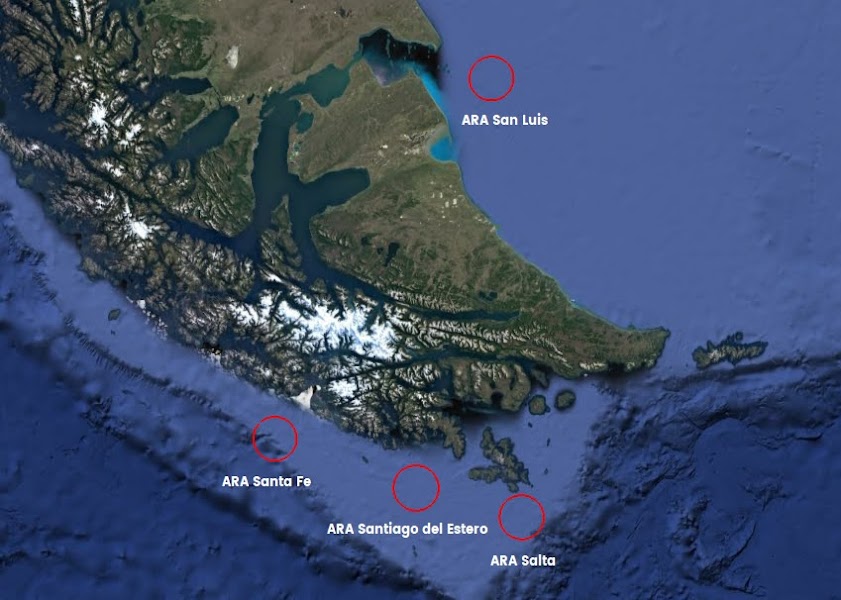
At first glance, FLOMAR’s division into three task groups seemed to indicate a coordinated amphibious assault. However, this may not have been the actual plan.
The assault on the Cape Horn islands was designed to be executed via heliborne operations. Only one section of Marine Battalion No. 4 (BIM4) was embarked on the aircraft carrier ARA Veinticinco de Mayo, while the amphibious transports Cándido de Lasala and Cabo San Antonio were reportedly empty.
Thus, dividing FLOMAR into three groups made little strategic sense—unless it was intended as a feint to lure the Chilean Squadron into expending its MM-38 Exocet missiles prematurely.
Even this hypothesis, however, seems improbable, as the Argentine Navy (ARA) was unlikely to sacrifice ships and crews in the manner that the ACh was seemingly willing to do with its "Acero" and "Bronce" formations (a contradiction present in Arancibia Clavel & Bulnes Serrano book).
A far more plausible scenario is that, by December 22, FLOMAR was organized into an optimal formation for naval-air warfare, with the primary objective of neutralizing the Chilean Squadron in open waters.
The Argentine plan likely involved:
This theory is reinforced by the positioning of Argentine submarines at the exits of Chilean fjords, suggesting they were tasked with tracking the Chilean Squadron’s movements—which, in fact, they successfully accomplished. These submarines would then attack any surviving Chilean vessels during their retreat.
The Argentine strategy was logically sound, given that Chilean forces had anticipated a direct attack on Picton, Lennox, and Nueva Islands. As a result, Chile had concentrated significant manpower and equipment on these islands, immobilizing these units and leaving them vulnerable to aerial strikes before an actual amphibious assault took place.
Additionally, these troops were unable to defend Tierra del Fuego, where four Argentine Marine battalions were scheduled to land.
This approach aimed to maximize the operational effectiveness of Argentine forces while gradually eroding Chilean defensive positions.
The Argentine Navy (ARA) could not operate as a single formation due to the design limitations of the aircraft carrier ARA Veinticinco de Mayo, which cruised at 20 knots and needed to stay at a safe distance from missile and artillery engagements.
Once the carrier launched its A-4 Skyhawks, whether for naval strikes or to neutralize Chilean maritime patrol aircraft (MPA), it remained vulnerable until their return.
Out of eight available A-4Q Skyhawks:
Additionally, the carrier’s speed limitations—with a maximum of 28 knots for short bursts but an operational cruising speed of 20 knots—necessitated the division of FLOMAR into three operational groups.
FLOMAR was traditionally trained to operate in two groups but was not accustomed to maneuvering as three separate forces. The shortage of modern warships had been partially mitigated by the acquisition of two A-69 frigates in 1978, which arrived in August and October of that year.
The fleet was structured as follows:
This strategy maximized Argentine naval effectiveness while protecting high-value assets like the carrier and its air wing in a high-risk combat environment.
It is important to note that FLOMAR was a 20-knot fleet, but so was the Chilean Navy, given that its two cruisers were also limited to 20 knots.
Thus, the approach speed was:

With air superiority provided by the aircraft carrier ARA Veinticinco de Mayo, as well as a modern surface fleet and an operational submarine force, Argentina held a significant advantage.
The joint air-sea-submarine operations conducted by FLOMAR would have further increased the likelihood of success, enabling:

The comparison between the Chilean Navy (ACh) and FLOMAR highlights a clear asymmetry in capabilities. The pink bands represent the effective range of primary weapons, specifically the MM38 Exocet missiles (35–42 km range). The ARA Veinticinco de Mayo is depicted with an A-4Q Skyhawk fully loaded with bombs and fuel, capable of executing a low-altitude (Lo-Lo) flight profile with a strike radius of 350 km—a tactic designed to evade radar detection during approach. These zones define the critical areas that each fleet needed to control before posing a legitimate threat to its adversary. From an analytical perspective, it is difficult to see even a semblance of parity between the two forces. Argentina’s carrier-based aviation and submarine warfare capabilities provided a substantial strategic advantage, making a balanced engagement highly unlikely.
Before analyzing Chile’s overall position, it is crucial to assess the Chilean Navy’s (ACh) ability to repel an aerial attack, which was expected to be the primary offensive strategy of the Argentine Navy (ARA). Some Chilean Almirante-class destroyers were equipped with the British Short Sea Cat SAM system. This was a small, subsonic missile, powered by a solid-fuel, two-stage rocket motor. It featured a cruciform wing structure for in-flight stability and was command-line-of-sight (CLOS) guided via a radio link. This meant that a remote operator manually directed the missile while keeping both the missile and the target within their field of vision. The same system was mounted on the Argentine cruiser ARA General Belgrano and, in its land-based Tigercat version, was deployed by the Argentine Marine Corps (IMARA) in Tierra del Fuego and the Army (EA) in Río Gallegos.
During the Malvinas War (1982), the Sea Cat proved highly inaccurate, primarily due to its lack of autonomous guidance. Its effectiveness was limited by the human operator’s ability to track a fast-moving target, a task complicated by:
As a result, the estimated probability of a successful interception with the Sea Cat was only 10%.
The most capable Chilean warships for anti-aircraft self-defense were likely the light cruisers Almirante Latorre and Capitán Prat, each equipped with up to 14 Bofors 40mm pom-pom installations. These cruisers would have been the most challenging targets to approach and attack. However, if communications and targeting coordination had allowed it, the task of neutralizing these ships may have been delegated to Argentine submarines rather than aircraft.
The most crucial intellectual exercise, which no previous analysis has seemingly considered, is the following:
The Chilean fleet would advance toward FLOMAR at a speed of 21–28 knots, assuming that its CASA C-212 maritime patrol aircraft successfully located the Argentine fleet (as Chile had no other reconnaissance assets). According to Chilean sources, the distance to be covered was between 120 and 193 nautical miles. This means that the Chilean fleet would take between 5 and 8 hours to reach within 20 miles of the Argentine fleet—the minimum range required to launch an MM38 Exocet missile, Chile’s only decisive naval weapon. For 5 to 8 hours, the Chilean fleet would be completely unable to fire upon or damage the enemy.
During this 5 to 8-hour approach period, the aircraft carrier ARA Veinticinco de Mayo could launch and recover 3 to 5 full combat sorties of its Carrier Air Group (GAE).
Assuming:
Each A-4Q Skyhawk would be armed with three 458 kg (1,000 lb) bombs, equipped with naval impact fuzes. Thus, in the first strike alone, the Argentine aircraft would drop 24 bombs on the Chilean Squadron (Escuadra). However, the A-4Q could also be configured to carry six 227 kg (500 lb) bombs, effectively doubling the number of bombs per sortie.
Assuming:
This means that, before any Chilean combat operator could press the launch button of a single Exocet, their fleet would have already been subjected to between 36 and 120 bomb strikes. Does this fundamental flaw in Chile’s battle plan become clear? Was Formation "Acero" truly as "armored" as its name suggested? What exactly was the Chilean command thinking? Rear Admiral Humberto Barbuzzi, commanding FLOMAR, would not have believed his luck.

As the saying goes, necessity is the mother of invention, though in this case, it appears more like desperation disguised as innovation.
Rear Admiral López Silva, seemingly convinced that FLOMAR’s greatest threat was its MM-38 Exocet anti-ship missiles, devised a rather unconventional countermeasure. In what can only be described as a bold act of ingenuity, he ordered Chilean technicians to modify their SA-316B Alouette helicopters, which were embarked on their Leander-class frigates.
While this approach deserves credit for creativity, it raises three serious questions:
If an Exocet locked onto one of these "floating decoys", the resulting explosion would have been nothing short of spectacular. A 1,100 kg missile striking a lightweight helicopter would have created an aerial fireball unlike anything seen in naval warfare.
A more probable and horrifying scenario:
This entire strategy further confirms that López Silva expected a naval battle akin to the 1973 Battle of Latakia—where two opposing fleets engaged each other exclusively with long-range missiles. His reliance on bad weather as his only real air defense, much like Hitler’s dependence on winter storms during the Ardennes Offensive, highlights the lack of a viable anti-air strategy. "Sail south and win the war..." Admiral Merino had told López Silva, in what now seems like an attempt to manufacture a legendary naval hero for Chilean morale. Instead, López Silva sailed south armed with nothing but a wish, a prayer, and a squadron of "decoy helicopters."

The Chilean Squadron’s "Trump Card": Alouette Helicopters with Radar-Reflecting "Chicken Coops"
Once the Chilean fleet entered open waters, it would have been at the complete mercy of:
As previously analyzed, distance overwhelmingly favored FLOMAR.
Furthermore, if the Chilean Squadron attempted to close the distance, FLOMAR would:
If we remove the slow-moving "Acero" formation and only consider the faster "Hierro" formation (capable of 28 knots), the following scenario unfolds:
Conclusion: There was no realistic scenario in which Chilean warships could approach within Exocet range of the Argentine fleet.
Probability of success: Zero.
The alternative strategy that Rear Admiral López Silva failed to consider was:
This option had serious political consequences, as Admiral Merino would never have forgiven him for "ceding" the islands. However, it would have significantly increased the Chilean fleet’s chances of survival.
Even so, this approach had severe limitations:
The Chilean Navy (ACh) was a serious opponent but entirely lacked definitive offensive weapons:
Had the war lasted just one week, it is not unreasonable to assume that the entire Chilean fleet would have been sunk—or, for all practical purposes, rendered combat ineffective.
Probability of success: Zero.

Had the Chilean Navy (ACh) suffered defeat, the most likely outcome would have been the sinking or neutralization of its primary combat assets.
Rear Admiral López Silva, supposedly the ACh’s leading expert in naval-air warfare, failed to recognize a fundamental reality—one that became undeniable just four years later.
In 1982, the Argentine Air Force (FAA) proved that a fleet confined to a narrow waterway (such as the San Carlos Strait) or operating close to the coast (as the southern Cape Horn islands would have forced the Chilean fleet to do) was highly vulnerable to low-altitude jet attacks.
The Royal Navy, which possessed far superior air-defense missile systems compared to the Chilean fleet, only managed limited aerial kills.
The only reason the Royal Navy’s surface fleet was not crippled was due to faulty bomb fuzes on Argentine ordnance, which often failed to detonate upon impact.
The Chilean fleet would have faced sustained attacks from:
These aircraft had proven devastatingly effective in anti-ship operations, even against a technologically superior fleet like the Royal Navy.
Did the Chilean high command truly believe they would achieve a different outcome?
Was this an operational miscalculation or sheer wishful thinking?

If the Chilean Navy (ACh) attempted to maneuver through the Beagle Channel, its destruction would have been assured.
However, this was not the scenario the Chilean Navy envisioned, according to the account provided by Arancibia Clavel and Serrano Bulnes.
With no viable naval escape, the ACh would have been forced to rely on air support from the Chilean Air Force (FACh), operating from Chabunco Air Base.
Unfortunately for Chile:
The result? Any remaining Chilean air assets would be decimated before they could rearm and refuel.
If any remnants of the Chilean fleet survived the battle in the Fuegian channels, they would have been forced to retreat to fjords such as Última Esperanza, Quintupeu, or Comau.
Final Assessment: The Chilean fleet, whether trapped in the Beagle Channel or forced into the fjords, was ultimately doomed to destruction or irrelevance.

The Ship "Avoided" in the Chilean Narrative: The Best Aircraft Carrier in Latin American History—ARA Veinticinco de Mayo
The technological and operational superiority of FLOMAR granted Argentina a decisive advantage in any direct engagement with the Chilean Navy (ACh). Carrier-based air power, modern submarines, and advanced reconnaissance capabilities ensured that FLOMAR would dictate the terms of battle. The Chilean fjords could serve as a natural refuge, but they would not change the fundamental strategic imbalance.
Without the means to counter Argentina’s air and naval dominance, Chilean forces would have faced insurmountable challenges—ultimately leading to a one-sided defeat.
Runawat to the Fjords, perhaps the best end for the ACh...This analysis does not seek to discredit the efforts or planning of the Chilean Navy (ACh). They did the best they could with the resources available. Or did they?
That said, it simply wasn’t enough. Submarine operations were doomed from the start:
Air support was non-existent:
Chabunco Air Base was a lost cause:
In the end, no amount of strategic improvisation could compensate for the overwhelming material and operational disadvantage Chile faced.

One of the most significant flaws in López Silva’s planning was his insistence on seeking a decisive fleet engagement—a Mahanian naval battle—despite leading a force that was crippled both strategically and tactically.
He committed his entire fleet (all-in) to an engagement where it would suffer heavy losses long before even detecting the enemy on radar—if it ever did at all.
Once the Chilean fleet revealed itself, its fate was sealed for the remainder of the conflict. López Silva’s plan essentially gifted the precise location of his forces to FLOMAR, allowing Argentina to dictate the battle on its own terms.
When a smaller fleet faces a larger, more capable one, it should avoid direct confrontation and instead rely on naval guerrilla tactics or attritional skirmishes.
Instead of rushing into open waters to engage an aircraft carrier battle group without air cover and with only one compromised submarine, Chile’s best option would have been:
In this conflict, the "larger fleet" wasn’t determined solely by numbers but by combat capability.
Sending the Chilean fleet "solo" into battle, without meaningful support from submarines or airpower, was not just a strategic oversight—it was a catastrophic miscalculation.

Did López Silva truly believe that the Argentine Navy (ARA) would willingly bring its key naval assets within Exocet range, allowing for some chivalrous missile duel? Did he expect a Jutland-style battleship engagement or perhaps a 1973 Latakia-like missile exchange, all while unknowingly sailing into a Midway-style ambush? Did the Chilean naval command seriously assume that the ARA would not exploit its overwhelming air and submarine advantage by deploying its carrier-based fighters and submarines before the Chilean fleet even detected FLOMAR on radar?
Did López Silva think the A-4Q Skyhawks wouldn’t be used against his ships?
Long before a Chilean officer could press the launch button on an MM-38 Exocet, the Chilean fleet would have already been under attack—
History never placed López Silva’s reckless plan to the test, but in retrospect, he sold a purely suicidal strategy as if it were a winning battle plan.
Across the Andes, some Chilean perspectives claim that the Chilean Navy’s presence "forced" FLOMAR to retreat. According to this version, López Silva and Admiral Merino’s decisions "deterred" Argentina, as FLOMAR chose not to engage, supposedly out of fear.
However, a more logical perspective emerges:
Chile had already taken on the massive diplomatic cost of rejecting an arbitration ruling (a blunder originally committed by the Lanusse government) and then accepting Vatican mediation under pressure. Would Chile have agreed to this had Argentina not placed a knife to its throat militarily? Probably not (Madrid Murúa, 2003). Yet, Argentina’s passivity in 1978 continues to have geopolitical consequences today.
Just like in May 1982, when FLOMAR had the opportunity to strike HMS Invincible undetected but failed to act (García Enciso & Rótolo, 2021), a similar opportunity was lost four years earlier—the chance to destroy the Chilean fleet when it was fully exposed.
That is why this article begins with a quote from Nelson—because in both 1978 and 1982, Argentina failed to act at the decisive moment. And that hesitation still carries geopolitical weight today.